本影片所學句型為There is…/There are…,影片中分為兩個部分協助學生學習。首先,透過Tommy和mom的對話認識句型及使用時機。之後,學習介系詞及相關例句,例如in(在…裡面):There is a baby in the box.、on(在…上面):There is a baby in the box.、under(在…下面)、beside(在…旁邊)、between(在…之間)、in front of(在…前面)、behind(在…之後)。最後,講解句型There is /are… 在(某處)有...,例句:There is a book on the desk./There are two books on the desk./There are some books on the desk.;There is/are not... 在(某處)沒有…,例句:There is not a book on the desk/There are not two books on the desk./There are not any books on the desk.。以及表示在(某處)有...嗎的yes-no問句:Is there a book on the desk?/Are there two books on the desk?/Are there any books on the desk?和回應句Yes, there are./No, there aren't./No, there aren't. There aren't any books on the desk。
本影片所學句型為Adverbs of Frequency(頻率副詞),影片中分為三個部分協助學生學習。首先,以David's Talk Show為主題,透過主持人與來賓的對話,認識頻率副詞相關句型。之後,藉由例句學習Adverbs of Frequency(頻率副詞)包含:always, usually, often, sometimes, seldom, never在句子中擺放的位子,例如頻率副詞會接在動詞前面(I never sleep in class.)、遇到be動詞時會接在後面(My parents are usually busy.)。最後,學習頻率副詞相關問句:How often(多常)do you dance?/How often(多常)does she dance?及回應句I /She dance (s) once a week/twice a week/three times a week.。
本影片主題為Predicting the Story Book by Cover Picture,讓學生練習透過Cover Picture中的資訊預測書籍的內容。書本的封面(book covers)具有相當重要的功能,例如它可以呈現主要角色(main characters)和場景(scenes)、設定故事的情感(mood)與步調(tone)並給予一些故事內容相關的線索(clues)。當根據封面圖片推測故事劇情時,可以透過5W1H(who, what, where, when, why, how)的問題來進行思考。影片的最後,透過不同書籍讓學生根據封面圖片推測故事情節與內容。
本影片故事主題為Medusa and Athena,透過故事讓學生認識Medusa 和 Athena及了解故事情節的發展順序,並利用練習題檢視學生對故事內容的理解程度。影片中敘述希臘(Greece)女孩Medusa的故事。Medusa認為自己很漂亮,因此目中無人(look down on others),直到她遇上智慧女神(goddess of wisdom),Thea認為"Beauty isn't the only thing in our life."。故事的最後,Medusa得到了懲罰。她的頭髮變成蛇(twisted and snakes came out of her head!),而且當人們看到Medusa時會變成石頭(turn into a rock)。議題相關:閱讀素養教育。
本影片主題為Predicting a Story Book by Titles,學習透過標題名稱(Titles)預測書籍內容。書本的名稱(Title)具有相當重要的功能,例如它可以呈現主要角色(main characters)和場景(scenes)、設定故事的情感(mood)與步調(tone)並給予一些故事內容相關的線索(clues)。當根據標題推測故事劇情時,可以透過5W1H(who, what, where, when, why, how)的問題來進行思考,例如標題中出現lighthouse的文字,我們可以推測故事發生的地點可能是海岸(coast)。影片的最後,透過不同書籍讓學生根據標題推測故事情節與內容。
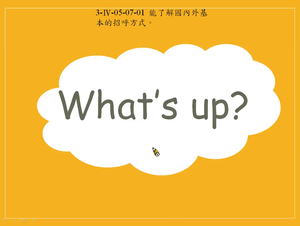
本影片所學生活用語為What’s up?,影片中分為兩個部分協助學生學習。首先,介紹生活中詢問他人近況的相關問候語及回應句,以及。之後,透過情境對話讓學生了解問候語的使用時機,影片中提及的問候語:How's it going?/What's up?/How are things with you?/How's everything?/How are you doing?/How do you do?;回應句則有:I'm doing okay./It's good to see you./Not much!/Nothing new!/Not special!/I feel terrible./It's all right./It's very bad.。之後,透過情境對話讓學生了解問候語的使用時機。
本影片所學句型為past tense-Questions,透過主角詢問其他人們在颱風天所做的事情為例,學習過去式yes-no questions、wh questions和回應句。最後,利用表格統整相關句型協助學生複習所學內容。影片中學習的yes-no問句包含:Did you go to school yesterday?/Did she do her homework last night?;回應句有No, I didn't. I didn't go to school yesterday./Yes, she did. She did her homework last night./No, she didn't. She didn't do her homework last night.;wh questions則有:What did you do yesterday/last night/ last Sunday?;回應句有:I baked cookies at home yesterday./I read books at home./I watched movies on TV last Sunday./I played video games at home.。
本影片所學為Direction Signs,以Sandra路途中所見的標誌為例,透過例句學習標誌ONE WAY、KEEP LEFT、KEEP RIGHT、NORTH、SOUTH、WEST、EAST代表的意涵。最後,藉由練習題讓學生複習所學內容。影片中使用的例句包含:Sandra rides her bicycle in a one-way street./Sandra keeps riding her bicycle left./Sandra keeps riding her bicycle right./Sandra rides east to Paul's house./The house of Sandra's cousin is near the country hall. Sandra will turn left.。相關議題:安全教育。